Skin growths can be both cosmetic concerns and indicators of underlying health conditions. Among the most common skin growths encountered across all age groups are warts. These small, non-cancerous skin lesions are caused by an infection of the human papillomavirus (HPV). With over 100 strains of HPV in existence, warts can appear on almost any part of the body, varying in texture, shape, color, and severity.
Understanding the specific types of warts you or a family member might develop is essential for choosing the right care path and preventing their spread to other body parts or people. While many warts are harmless and resolve over time, others require professional evaluation by a qualified skin specialist or the best dermatologist in bhiwadi to ensure effective treatment and avoid scarring.
Types of Warts You Should Be Aware Of
Warts present in several distinct ways depending on the strain of HPV involved and the region of the skin affected. Below are the primary varieties of skin warts you should know about.
1. Common Warts (Verruca Vulgaris)
Common warts are the most frequently diagnosed form. They typically appear on the hands, fingers, knuckles, and around the nails, though they can sprout anywhere on the body.
- Appearance: Rough, raised bumps with a grainy, cauliflower-like surface.
- Characteristics: They often contain tiny black dots, which are small, clotted blood vessels supplying blood to the growth.
- Transmission: Highly contagious through direct skin-to-skin contact or shared personal items like towels.
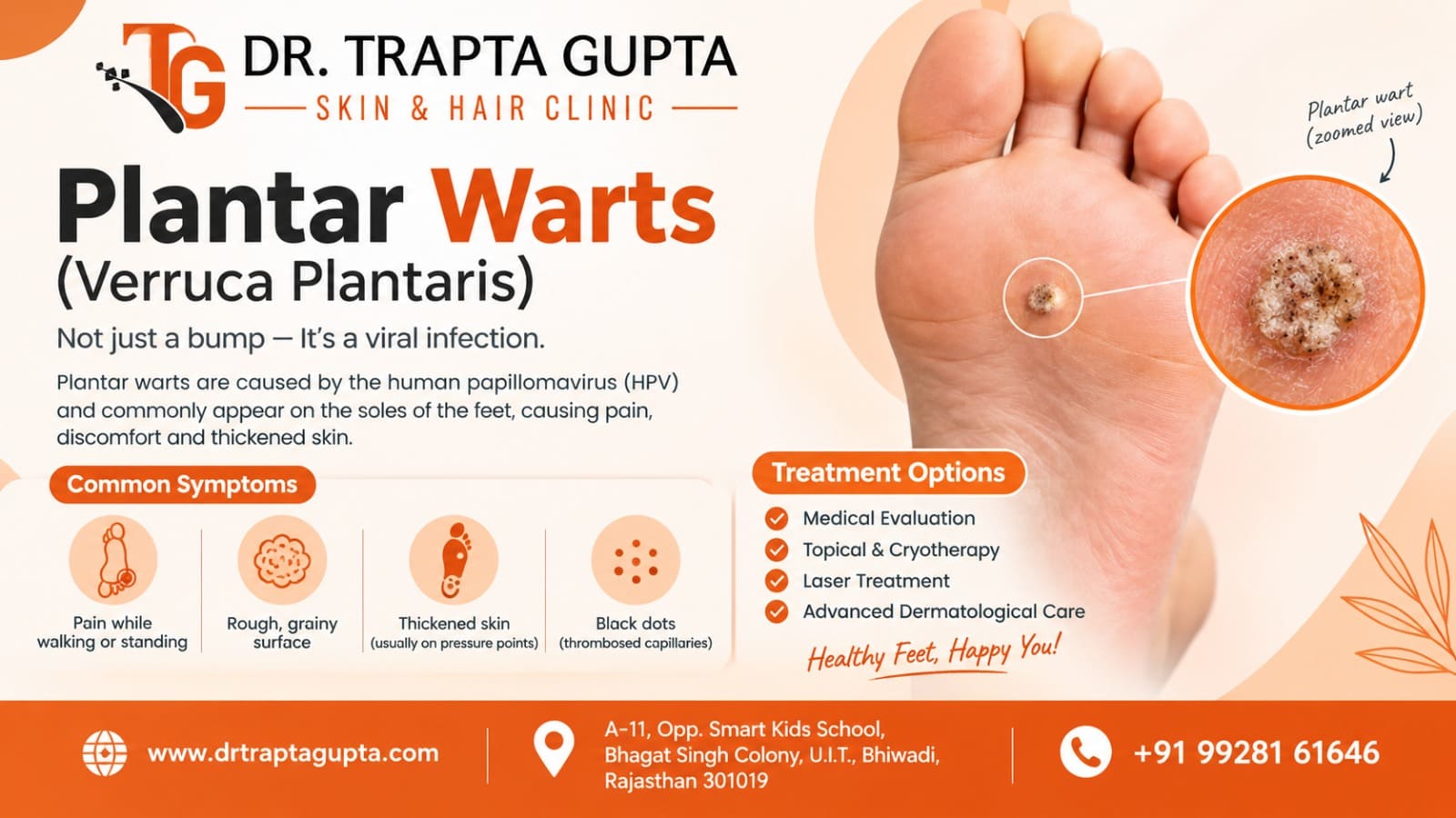
2. Plantar Warts (Verruca Plantaris)
Unlike most other warts that grow outward, plantar warts grow inward due to the pressure exerted by walking and standing. They develop strictly on the soles (bottoms) of the feet.
- Appearance: Hard, flat, or thick patches of skin with a well-defined center, often mistaken for calluses or corns.
- Characteristics: Because of their location, they can cause sharp, stabbing pain while walking, standing, or bearing weight.
- Transmission: Frequently contracted in warm, damp environments such as public swimming pools, communal showers, and locker rooms.
3. Flat Warts (Verruca Plana)
Flat warts are smaller, smoother, and flatter than other varieties. They typically grow in large clusters, sometimes numbering from 20 to over 100 at a time.
- Appearance: Smooth, flat-topped, yellowish-brown or flesh-colored bumps.
- Characteristics: Most common in children (on the face), adult men (in the beard area), and adult women (on the legs), often spreading along razor paths or scratch marks.
- Transmission: Easily spread via shaving or scratching active lesions.
4. Filiform Warts (Digitate Warts)
Filiform warts are fast-growing, distinctive lesions that project outward from the skin surface in thin, finger-like threads or stalks.
- Appearance: Long, spiky, or thread-like growths that match the surrounding skin tone.
- Characteristics: They tend to form around delicate facial areas, including the eyelids, lips, nose, and neck. While usually painless, they can cause cosmetic distress and easily catch on clothing or towels.
5. Periungual Warts
Periungual warts develop specifically under and around the fingernails and toenails.
- Appearance: Rough, uneven, bumpy growths that surround the nail border.
- Characteristics: As they enlarge, they can cause significant pain, disrupt healthy nail growth, and permanently distort the nail bed. They are especially prevalent among individuals who bite their nails or pick at cuticles.
6. Genital Warts (Condyloma Acuminata)
Genital warts are a specific form of sexually transmitted infection caused by low-risk strains of HPV (primarily HPV types 6 and 11).
- Appearance: Soft, flesh-colored bumps that can appear singly or in clusters resembling a small cauliflower.
- Characteristics: They affect the moist tissues of the genital and anal areas. They can cause itching, burning, discomfort, or bleeding, and require immediate medical evaluation and specialized management.
7. Mosaic Warts
Mosaic warts are not a separate strain of virus, but rather a tight cluster of multiple plantar warts that grow closely together over a larger surface area on the sole of the foot.
- Appearance: A broad plaque of interconnected, flat, rough-surfaced lesions.
- Characteristics: They are notoriously stubborn to treat with over-the-counter methods because of their size and depth, making professional dermatological intervention necessary.
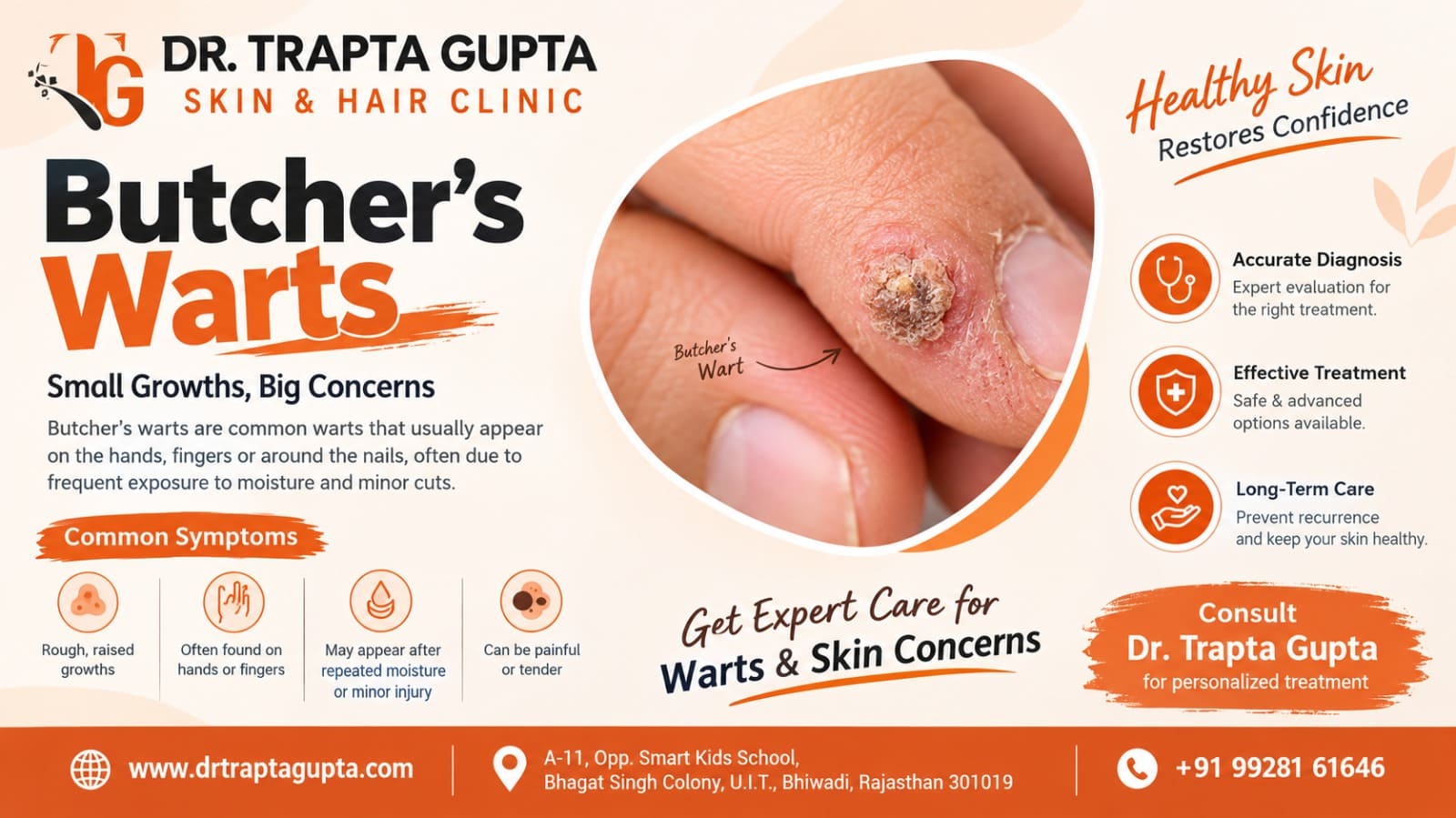
8. Butcher’s Warts
Butcher’s warts are a distinct clinical presentation of common warts typically observed in individuals who handle raw meat, poultry, or fish professionally.
- Appearance: Large, cauliflower-like, hyperkeratotic lesions similar to common warts, primarily affecting the hands.
- Characteristics: Associated with chronic skin maceration, cold temperatures, and minor skin trauma typical in meat-processing environments.
9. Focal Epithelial Hyperplasia (Heck’s Disease)
Heck’s disease is a rare, benign condition caused specifically by HPV types 13 and 32. It predominantly affects children and young adults in specific ethnic populations.
- Appearance: Multiple soft, smooth, painless, mucosal-colored papules inside the oral cavity (on the lips, tongue, and inner cheeks).
- Characteristics: These growths are harmless and frequently resolve spontaneously over several months to years without leaving scars.
Frequently Asked Questions (FAQs)
Q1. Are all different types of warts contagious?
Yes. All warts caused by HPV strains are contagious. They spread through direct skin-to-skin contact, sexual contact (in the case of genital warts), or indirectly by touching contaminated surfaces, towels, or razors.
Q2. How can I tell if a growth on my foot is a callus or a plantar wart?
Plantar warts typically disrupt the natural skin lines of your foot and often contain tiny black dots (clotted capillaries). They are usually painful when squeezed side-to-side. Calluses, on the other hand, maintain normal skin lines, lack black dots, and are more tender under direct top-down pressure.
Q3. When should I consult a dermatologist for wart removal?
You should consult a skin specialist if a wart is painful, bleeds, changes color, spreads rapidly, appears on sensitive facial or genital regions, or fails to respond to over-the-counter treatments. Visiting the best dermatologist in bhiwadi ensures accurate diagnosis, exclusion of malignant conditions, and safe clinical removal via cryotherapy, laser therapy, or radiofrequency cautery.
Conclusion
Recognizing the various types of warts is the key to managing them safely and effectively. While some different types of warts—such as small common or flat warts—may eventually disappear as your immune system responds, others can persist, multiply, cause severe pain, or lead to complications if left untreated.
Avoid picking, scratching, or cutting warts at home, as this can easily spread the viral infection to surrounding healthy skin. For fast, safe, and permanent removal, schedule an appointment with a qualified clinical specialist or the best dermatologist in bhiwadi to receive a tailored treatment plan suited to your specific skin needs.